Thursday, December 03, 2009

Pilot Automatique


There's something just so French about Nathalie Claude's one-woman, three-robot show Salon Automaton, which had its English-language debut at Buddies this week.

Claude's introductory monologue, with its polite bluster and assertive indirectness, has a Proustian quality, as does the very idea of a Friday night salon where the The Dandy Poet, The Cabaret Artist and The Drinking Patroness gather to entertaining their obliging hostess, who serves them champagne and cucumber sandwiches, whether they are able to eat it or not.

For the first hour of the two-hour production (which is about 30 or 40 minutes too long by my nodding-off measure; the original French version is apparently a bit shorter), this circuitousness is something of a theatrical strategy, a distraction from what the audience is seeing on stage. Which is an overeager woman talking to three seated robots, each with a moving mouth, a soothing voice and a set of proscribed movements which include emphatic gesturing but, alas, not eating. While the hostess chatters away--sometimes about human existence, sometimes about nothing particularly memorable--we're unsure whether she knows her company is spring-loaded, whether the guests themselves know they are robots or what kind of world has created this situation.

The reveal is slow, much too slow, and somewhat beside the point. The show has far less to say about the "why" of how humans find themselves turning to mechanical companions than "how," which is to say, with apprehension and naive optimism. When you've created an illusion designed to protect you from the vagaries of human behaviour, anything less than perfection might very well drive you bonkers.

The production works best when it's showing, not telling. We see Claude as all-too-human, blathering over-dramatically like a nervous hostess filling gaps in the conversation, so when the automatons (voiced by Clinton Walker, Moynan King and Leni Parker) offer up their scripted, banal cliches, they come as something of a relief. Their speech and motion are restricted, but fascinating nonetheless. They're playing to type because they have been created as types and there's theatrical pleasure in having our own perceptions of the world mirrored back to us, confirmed as accurate, even if that accuracy emerges out of our own manipulations.

Claude's core idea is a spot-on critique of our increasingly personal relationship with technology, even as it suffers from the very human trait of overkill.

Tuesday, November 24, 2009

'Moon' child


Kristen Stewart? How has an actress so sullen, so dour and unemotive managed to steer the Twilight franchise into the hearts and pocketbooks of movie audiences worldwide?

So visibly awkward, it's like she's been coached not to hunch but keeps forgetting. Her chin juts like she's on edge even as her eyes zone out. Wear-wolfs? Vampires? Stewart's Bella seems ready to doze off any second or go stand in the corner and sulk.

Her very particular talent made sense in, say, Adventureland, where her character was the same sort of sullen beauty. But, setting her performance aside, we constantly hear the other Twilight Saga characters--from the vamps to the wear-wolfs to the cafeteria kids--obsess over her. They keep telling us she's special as they orbit around her like she has some special power. There's a tremendous disconnect but Stewart must be doing something wright. New Moon made more than $150 million domestically in its first weekend, quite an achievement for a film that, judging by the look of it, cost a fraction of the cost of other members of the $100-million-plus club.

I think it's because she's so utterly replaceable in the viewer's imagination. Any viewer who wants to imagine themselves as the focus of New Moon's very sexy love triangle--and that would be pretty much anyone who went to the film on their own steam--can banish her from registering on their cerebral cortex, leaving a blank spot onto which they can project themselves. She's not a star--someone who's inherently watchable--and she's no character actor either. We can essentially place our thumb between us and her face and let ourselves take part in the fantasy that her Bella doesn't really deserve.

Wednesday, October 28, 2009

Tuesday, October 27, 2009

CBC rebranding

You have to applaud the effort to go for a younger, more contemporary look, but there's something about the relaunch of CBC's news departments that feels like old wine in new bottles. On radio, Peter Armstrong makes a much more relaxed, casual anchor, but the stories are still policy-wonky with a dose of recent death tolls. If the Corps is going to try to skew young, it's got to have a broader and more vibrant news agenda.

The National's facelift is even less successful. All you have to do is click a few times here, a few times there--nobody said it would be easy to find, baby--and you can watch a 10-minute web-only broadcast of the flagship show. That's where anchor Peter Mansbridge, not content to just walk around a studio reading the news, as he now does on TV, takes off his jacket, revealing his paunchy tummy, and stands in a hallway reading the news. You can see the direction they're headed. If they don't skew as young as they'd like this time around, Peter will be reading the news in his pajamas--or worse--perhaps while taking a leak or between rounds of flossing. That'll lure the tweens.

About the new name for Newsworld, CBC News Network--this must have been decided solely on the basis of how it looked on the screen, not how it would roll off the tongue or abbreviate: CB...CNN. Or maybe they are that desperate and cheesy, like a donut shop calling itself Country Time to cash in on the confusion with Country Style/Coffee Time.

I realize the emphasis is on the brand "CBC News" but did they fail to notice that that phrase was contained in the old name?

Tuesday, September 29, 2009

Dressing for the ladies

I've been a reader of men's magazines (make that men's style magazines) for a long time. I was especially obsessed with the early 1990s incarnation of Esquire and then Details and more lately Men's Health, which shows you where my interest have gone as I have gotten older. Despite their differences, which show themselves mostly in their feature articles (art auctions or war? Mr. Mom or CIA conspiracies? toxic meat or George Clooney?), they all have the same kind of simultaneously snobby-chummy tone throughout their service sections.

The men's magazine snobby voice is the kind of know-it-all who would be insufferable if he wasn't so helpful. (I realize he's in a newspaper, not a magazine, but The Globe's Russell Smith is an current best-practices standard of this genre.) And then there's voice of the ordinary Joe who, like you, starts out knowing nothing about fragrances or high-end watches but through a process of discovery is, by the end of his 250-word blurb, able to make very specific recommendations for every reader. These two modes of conversation are quintessentially guy-magazine-y, and they're anchored in the two ways guys talk to other guys.

So when Men's Fashion (published by the equally generically titled women's fashion magazine Fashion, which is published by the slightly more specific Toronto Life) fell out of my Globe last week, I was intrigued. (Notice the ordinary-Joe lead-in to the topic at hand; perhaps I should have thrown in a "Gee whiz.") Here was a men's style magazine edited and written mostly by women, perhaps in their spare time while they were waiting for Fashion's proofs to come back from the printer. Of the four men shown on the contributor's page, two had worked on the magazine's sole photospread--shutterbug and stylist--one had written on grooming ("Men may prefer washing up just once a day..." starts the article but not on the page cited by the contributor's blurb) and one wrote a feature article on defective sperm.

The rest was pretty much written by women. As someone who believes that anybody can write about anything, the strange thing was--I could tell without looking at the bylines.

From the sexual connotations of the cover headline, "Playing Around With Justin Timberlake"--it would be hard to believe a straight man would have produced the same text--to the first-person lecture on sharing a bathroom--"Do men even want this space?"--there was something of a nagging wife/girlfriend throughout the magazine's pages. Even the cover line for the sperm article pointed an accusatory finger at the reader, "Actually It Is You." Hard to image a buddy, or even a know-it-all, speaking that way to a friend.

There were moments when long pent-up stereotypes about men seemed to have finally found a place to be joylessly unleashed: "For many men, shopping is a necessity rather than a hobby--something that needs to be done when old clothes no longer fit or look right." And moments when men were merely afterthoughts: "In the world of perfume, a great name is worth its weight in gold. So if women enjoy Pleasure and Joy, guys now have an outlet with Play and Play Intense."

It dawned on me that this wasn't a magazine for men but a magazine for women about men. They're the ones the editors are assuming are doing the clothes shopping, so the editors have merely cut out the middleman and gone straight to the decision maker. It makes sense. That's why the "That girl" pin-up is so modestly dressed; she's been styled threatless to the core readership.

But then there was advice about avoiding zits by showering regularly. And the spotlight on cars emphasized little other than power. Power, muscle, power. Wouldn't these female readers who are so eager to get their husbands to spend money on Ben Sherman coats and John Varvatos sweaters want to rip out these gasoline-fueled pages before their significant others saw them and were tempted to siphon of some of the disposable income slated for Harry Rosen?

That's when the light went on. There are no readers in mind for Men's Fashion. Only advertisers. Once the thing is sold by the sales team, it hardly makes a difference what fills the gap between the Audi ads and the Paco Rabanne, neither of which would be interested in buying into a catalogue that's just that, a catalogue.

Tuesday, September 22, 2009

The new season looks a lot like the old season

I know that in some circles, Soulpepper can do no wrong. But, really? Four remounts, including two shows, Glengarry Glenn Ross and Billy Bishop Goes to War that were highlights in the season we're just three-quarters of the way through.

Then we have works by David French and Joe Orton again, admittedly different ones. Sure, they're great plays by great playwrights but there must be others kicking around. Is the modern theatrical canon that Soulpepper loves so much really that tiny? Obviously, they made money off these plays--last season was exceptionally strong--but what does it say to subscribers, who would have seen Billy Bishop less than six months earlier? In some ways, it's less a theatre season, closer to a Broadway run, with shows running until all the available audience has seen them.

There are a few interesting and surprising choices. Sharon Pollock's Doc gets a little female can-con in there, and A Raisin in the Sun much needed colour. The academy pieces, especially Daniel Brooks' non-traditional mounting of The Cherry Orchard also look promising.

Thursday, September 17, 2009

Flame wars on Craigslist

Suddenly fire-eating is an in-demand skill. Here's the first ad:

Photog looking for fire breather (GTA)
from craigslist | tv/film/video/radio jobs in toronto
Hello,

I'm looking to do a portrait of a fire breather for my portfolio (and for fun:) Please check www.fordphoto.ca for examples of my work. As compensation I will provide a sweet 8x10 or 11x14 fully re-touched print as well as a DVD of some of the "out takes". Lets do this!

Thanks for reading

Mike


And here's the second:
looking for fire breather paid gig 150 (toronto)

just like the guy below I will supply a print and a dvd with the images plus the pictures will be way better. Also I will pay you for your time. I know that fire breathing is very dangerous ( burns or to your heath). This is a incredible talent and you should be paid something for your time, giving it away for free when the other guy will use it to further his career is stupid. 150 is not a lot of money but I will do it on your time. If you have any other fire skills please list them with a simple photo of your self. It might even be cool to have more than one person at a time.

cheers

Tuesday, September 15, 2009

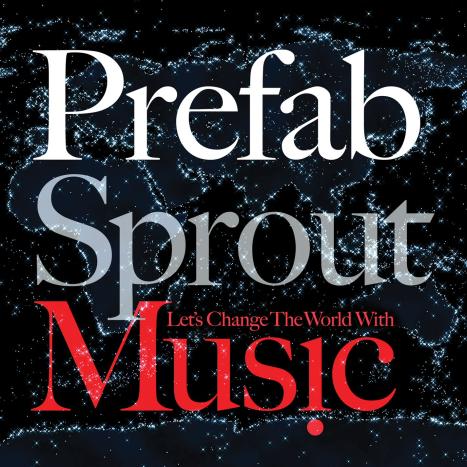
Changing the world with music


Picking favourite bands when you're young is a little like betting on a horse race without even knowing it. Pick someone like the Eurogliders, and the horse doesn't even make it out of the gates. I loved the Thompson Twins and figured they would be around for a long time--I remember some music magazine calling them the future--but they barely stumbled into the 1990s. If you backed U2, you never stopped counting your winnings. Whitney? It's still up in the air.

Then there was Prefab Sprout, a band with an obscure name that never charted very high, never broke into America despite the exuberance efforts of 1988's From Langley Park to Memphis to take the world by storm. That single-filled album, with a candy-store of production tricks by Thomas Dolby, was their best bet and, still, they remained a cult act. Under pressure from the record company, they had even shelved Protest Songs, the more forlorn album they had recorded before it, in order to break into the charts. Their last release was a 2001 concept album about cowboys, though not country music, except a reworked version of the "Streets of Laredo." Which is all to say that Prefab Sprout are an unlikely endurance runner. To cite them as one of my favourite bands has been to invite a scrunched face and a "Who?" It is to end a conversation about music. I wouldn't have guessed that would change in the late noughts.

If great philosophy is untimely, so is great music. It's been funny over the last few years to hear younger bands like Stars cite Prefab Sprout as an influence, to have them name checked in the New Yorker and The Guardian. It's the world that's changed, moved itself a few degrees closer to the sensibility of the Paddy McAloon, the man at the heart of the Sprouts. The release this month of Let's Change the World With Music, an album slated for release in 1992 and then shelved, is the ultimate vindication. Its contents were placed in a time capsule, let sit for 17 years and, voila, it's something fans of Beirut might enjoy.

It's easy, from the commercial point of view, to see why this album was not released. Each of the songs touch on the idea of music, which seems indulgent, and God, even more so. With its Irving Berlin and Ira Gershwin flourishes, its grandiosity and genre-less-ness would have seemed out of place in the era of grunge. But while the definition of hit music has narrowed--aren't a handful of producers responsible for most of the songs that chart nowadays?--the definition of pop music has relaxed. Even the 1990s production values of this reworked demo don't come off poorly compared to, say, Cut Copy or Lily Allan.

At the core of Let's Change the World With Music is McAloon's song-writing skills, which produce melodies which worm their way into your head after only a few spins. "I Love Music" sounds at first like a half-hearted Frank Sinatra parody, but gets you with its genuineness, its coy phrasing, those little pauses in lines like, "Who's my hero? The unnerving, unswerving Irving Berlin." In another homage to tunefulness he yearns for sweet gospel music to "carry this boy away from danger." If movies about movies aim to show us how our visual landscape is created, then music about music shows us how our emotional landscape is renewed and regenerated.

McAloon has gotten flack for the pomposity of some of his themes; one UK critic said the album title was worthy of U2. And though he he's not being sarcastic with songs like "Earth: The Story so Far" there is a humility that's inherent in the Prefab Sprout enterprise, which started at as definitively anti-romantic with a faux-blues song like "Cruel," which always struck me as a celebration and critique of feminism ("Cruel is the gospel that sets us all free, then takes you away from me"). McAloon has matured since then, realized that celebrating love without deconstructing it is part of what music does. But no matter how much he wants to change the world with music, he's well aware of his own limitations and that of art. It's not a choice between self-aggrandizement and irony, it's a choice between giving up and pressing on. And if digging through their vaults for these gems is pressing on, I figure I've backed the right horse.

Sunday, September 06, 2009

Mutual exclusivity

An ad in The Globe and Mail for the Bloor-Yorkville shopping area has one bubble with the text, "We're cultivating a greener bloor with wider walkways & greener spaces" and the next one with "Over 7000 parking spaces." I suppose, they may be parking the cars on the walkways and green spaces, but aren't these contradictory promises? It's that whole promise of "you can be environmentally sensitive and not change anything about your life, you can reduce your carbon footprint and consume material and energy at the same rate you've always consumed them."


Ah, no.

Tuesday, September 01, 2009

Craigslist posting of the day

I would have posted the link but it's since been flagged and removed.

Get Paid To Destroy Objects, and Take Photos, Shoot Video (N/A)

from craigslist | art/media/design jobs in toronto

Okay, here's basically it; I enjoy watching people (Women, specifically) destroy a wide variety of objects - electronics, glassware, what-have-you; Rates vary and are negotiable, paid upon delivery of the Photo / Video set, or webcam session. This position will be on a strictly virtual basis, and payment is delivered via Paypal.com.

Work is intermittent, so don't expect a regular income.

Monday, August 31, 2009

Monetizing music

I actually don't think levies on memory is a terrible solution to the collapse of the music industry.

Let's play with some rough numbers, just for fun. Let's say you had a music consumer who used to spend an average of $150 a year on music--10 albums annually at $15 a pop. Now a compulsive downloader, he doesn't spend anything but his annual music downloads have a retail value of $4,000.

Right now, the music industry seems to think it's entitled to the $4,000. But if illegal downloading were to end tomorrow, so would his massive music consumption so he's soon be back to the $150 of spending again. So the question is not how to prevent this guy from downloading every song ever recorded, but how to extract $150 or more annually from this guy, no matter how much music he gets. It would be better if he paid more for more music, and there are probably ways of doing that, but for the moment we're just trying to restore an acceptable level of financial remuneration to the system. I think "the same as before" is more acceptable than zero.

But I'm not even sure "the same as before" is possible when your starting point is zero. So let's be even more realistic. I've read reports that artists have make as little as 30 cents per album, that $1 per album is a good deal. So under the new business model, why don't we give the artist $3 per album. With downloading as part of the new distribution model, let's keep marketing and administration costs to another $3 per album. Now our music fan is paying $60 for his 10 albums. Pro-rated as a fee applied to media that can hold music files, that's not an outrageous amount of money.

How do we get a little closer $150? License file-sharing services that meet certain criteria. Better search function, better speeds, fewer ads and spyware programs and less bogus files would lure people from illegal file-sharing to legal file-sharing. Or, because those terms are a little moralistic, unlicensed file sharing to licenced file sharing.

Even someone obsessed with "free" would give serious consideration to a monthly fee of $7.50 to legally download all the music he wants in a way that's as convenient as iTunes and that actually gives money directly to the artists he likes, much like how libraries pay fees to the creators of works that circulate. In fact, in paying for high-speed Internet access, he's already accepted the premise that downloading media files is going to cost him something each month. Why not 10 or 10 percent more, especially if he's getting value for it and is no longer a "criminal"?

The thing is to keep the price low. $7.50 montly is a much less dramatic departure from zero than, say, $30. Again, the industry is obsessed with the $4,000 worth of songs on his hard-drive, but they've got to let it go and focus on the conversion rate, rather than on their idea of justice.

By charging a (mandatory) fee on storage devices and by charging an (optional) monthly high-volume file-share fee, we can bring the same $150 a year back into the music industry. But, with online distribution and a de-emphasis on corporate systems, we've eliminated many of the "suit" and retail positions, giving the more of that money to artists instead. We give indie bands comparable access to larger acts, if they can do a good job of getting their name into the memories of music-searchers. If we have a system of licensed file-sharing services, we can keep track of who is getting downloaded and split the storage fee and monthly fee in a fair way. The distribution/marketing system becomes the finance department.

The corporate suits, though, are not interested in exiting stage right and so obsess over the $4,000 in "lost revenue," not realizing that that money is never going to be available to them, no matter how many court cases they launch. They've got to start with zero and build up, not start with "He's got our whole catalogue on his hard-drive!" and seek revenge.

Turning the Pages


I remember before I moved to Toronto, I had a friend who lived there who was (and is) a great enthusiast of the philosopher Gilles Deleuze. He'd swing by Pages bookshop on Queen West with astonishing regularity to see if new Deleuze stock had arrived. Pages is where such intellectual capital could disperse itself beyond the dusty halls of academia. He would take note that, say, three copies of Capitalism and Schizophrenia had arrived and, a few days later, note with equal or greater joy that one had been sold.

He successfully passed on the Deleuze meme to me. When I came to live in Toronto, I would also monitor the Pages' Deleuze collection as something of a guide to the rise and fall of his popularity, of a way to feel that there were other people out there who shared my interest. I would also browse the art books, first looking for naughty bits, then architectural porn, which I'm not sure is any more wholesome. I'd also track the books of people I knew. And end up buying a few magazines or remainders. Or the occasional splurge.

So it was a sad moment when I swung Pages by on closing day. I must admit my motivation was predatory. I felt a moment of personal disappointment; I was hoping for a better discount than the 35 percent off they were offering. Then I took a look at the empty shelves, the oddball handful of remaining stock and I was a little choked up. The bookstore at the beating heart of the city is no more. It makes it much harder, and much less fun, to take our collective cultural pulse.

Sunday, August 30, 2009

All in a Heap


Funny where naiveté can leave you. When I had seen the name of the musical entity Imogen Heap in print, I had, in my head, pronounced it "Ih-MOE-gen Heap" and visualized some nasty punk band, referencing toxic waste. So I didn't care when their song appeared on The OC. Of course, Imogen is pronounced more like "Emma-Jen" and the "heap" is a last name, not a metaphor. And she sounds more like Sarah McLachlan produced by Enya, with bursts of Bjork kookiness and Tori Amos indulgence. Actually, the songs on her new album have more shape than Sarah's, Bjork's (well, late Bjork) and Tori's. She's a much more grounded eccentric, musically speaking.

In fact, I think Imogen has taken over the sleek and emotional pop ship Dido abandoned after her debut album (well, she abandoned the "sleek" and the "pop" part).

Anyway, Ellipse is a lovely album, especially the first single.

Wednesday, August 26, 2009

Electro Calvinism


As much as I loved "I'm Not Alone," the first single from Calvin Harris' new album Ready for the Weekend, I knew there was trouble on the horizon when I read an interview with him talking about how, at 25, he was starting to feel old, wondering about the merits of club life. Oh God. The man who sang, "I like all the girls" is getting philosophical and world-weary. Most young turks manage to get a couple of albums to market before they consider themselves codgers.

But maybe there is a finite amount of energy in each of us and Harris front loaded most of his. His fantastic debut album I Created Disco was the kind of pure deadpan chutzpah only the British can get away with. Each song contained such audacious and catchy ideas, the execution hardly mattered. "I've got my car and my ride and my wheels, when I go to Vegas," he sang, glorying in the stoned redundancy. The songs on I Created Disco may not merit a place in the immortal canon of pop music, but they grabbed you immediately, gave you a laugh on the dancefloor and stayed with you for weeks, at least. Call it vapid, the album knew it was vapid and let you in on the joke.

The songs on Ready for the Weekend aren't so starved for attention. The world, it seems, is a more serious place and Harris has had to impose some structure in order to survive. The humour, which had made Harris a peer of LCD Soundsystem and Daft Punk, is notably absent.

It's like Harris is pacing himself. Each of the songs has its role to play, sometimes dance-y, sometimes more--it freaks me out to say this--reflective. "Burns Night," for example, is a loping late-night instrumental jazz jam, seemingly designed to encourage drunk patrons to roll home, while "Limits" is full of robotized regret.

Ready for the Weekend is simultaneously a more utilitarian and more serious album. Its 90s aesthetic aims to please with its piano chords and house-soul backing vocals. "Stars Come Out" reminded me of nothing less than the dancey tracks from Moby's Everything is Wrong, which I'm quite sure Harris wouldn't take as a compliment.

But when you're self-consciously producing a retro album, I suppose that effective emulation is an accomplishment. There are four tracks here that would not drive me from the dancefloor and two more--"I'm Not Alone" and "Dance Wiv Me"--that I would scramble across a crowded room to turn up. It's a far cry from I Created Disco but it's still a better batting average than most pop-dance albums (though I suppose that one could say that Lady GaGa had raised the bar in this regard).

It's the future I fear for. The best track, "Dance Wiv Me" an electro-hip-hop collaboration with Dizee Rascal, predates the rest of the album. Harris' more methodical direction seems to be taking hi further and further away from what made him such a lovable sod.

Monday, August 17, 2009

Drinking & driving


The LCBO has finally decided where to put its Roncesvalles liquor store. This comes a year--a full year--after they told me that they were close to picking a location. And the new location won't open till next summer. It's great to see how quickly this retail monopoly works.

Now, they could have had a role-model store on Roncey. Something cute, storefront and pedestrian friendly. But no. The LCBO's passion for huge parking lots won out. They're putting it in the the plaza currently shared by the city's saddest Loblaws and a contender for the city's saddest Zellers (the latter category is a very competitive one, I know, thus the qualification). It's a dying plaza. There used to be a dollar store or two there, but they're gone now. It's certainly close to Roncey. It's walkable, yes. But it's really meant for driving to. The LCBO's suburban car-oriented mentality again trumps all other factors.

Wednesday, August 05, 2009

Coasting through

The Toronto Star's continuing grudge match against cyclists raises some interesting questions.

Firstly, while their reporter was watching 138 cyclists fail to come to full stop at a Stop sign, how many accidents did they cause? Judging by the story, it seems they caused none. Secondly, while the experiment was being conducted, how many cyclists elsewhere in the city--say, along nearby College or Dundas--received an injury because a careless driver opened their car door into their path? That number is harder to guess at--the Star's experiment certainly required less effort--but I figure there were a few. A few weeks ago, I nearly missed being car-doored three times in the two-minute ride along Dundas between Dovercourt and Brock.

This obsession with the letter of the law rather than general traffic safety made me think of harm-reduction strategies when it comes to drug use. Sure, you could arrest every junkie in Vancouver's downtown Eastside for possession, but who does that help? The junkie's illegal behaviour creates a situation where she's the primary victim. As a society, we've parsed out a drug-use strategy that, while it could bear improvements, at least acknowledges that treating everybody by the same standard to the exact letter of the law does nothing to achieve the goals that the standards and laws were created to achieve.

Good traffic policy and good policing should be about results, not making jealous Star-reading motorists feel vindicated in their contempt for cyclists.

If I thought that encouraging all cyclists to come to a full stop at all Stop signs would reduce accidents and create a situation where drivers were not so careless about opening their doors without looking, I'd be on that bandwagon in a second. But it is not cause and effect. The most lawful cyclist in a city full of lawful cyclists still takes her life into her hands every time she passes a parked car.

Cities need to stop treating cyclists like thin, slow cars and come up with policies and infrastructure that reduce harm. By that I mean, saves lives and prevents accidents and more broadly, reduces gridlock, toxic emissions and the urban-heat-island effect. Because I think you could stand at the corner of Beverly and Baldwin for weeks, counting rolling-stop cyclists and never see an accident. So what's the point?

Tuesday, August 04, 2009

Game-changing moves


Depeche Mode had been around for a decade when it released 1990's Violator album. It turned out to be a game changer for the band and for electro-pop/Brit pop in general. The Pet Shop Boys' masterpiece Behaviour was a response to it, an album that placed the PSB on a track that has kept them relevant to this day. Depeche Mode had shown how versatility and depth could be wrung out of a preexisting sound and image. Shania Twain performed a similar kind of magic when her Come on Over album showed how country music could be loosed from its genre, how production techniques could re-purpose songs for different markets.

(As an aside: During DM's recent Toronto concert, the first time I've ever seen them live, I was surprised how theatrical the show was, how much closer it was to glam rock than to knob-fiddling; as someone who does most of his music-listening through headphones, who thinks of Depeche Mode as a studio band, the energy and the spectacle was totally unexpected, helping me understand how the band's longevity and success has been nurtured on the stage as much as in the CD player. It's hard to imagine, say, New Order selling millions of concert albums and tour T-shirts.)

When it first came out, I thought Beyonce's "Single Ladies (Put a Ring On It)" video was brilliant. Well, of course, a lot of other people did as well. But it wasn't until I saw Shakira's "She Wolf" that I realized that "Single Ladies" was a game changer.

Dance has always been integral to the music video genre; early videos were often merely shots of people dancing. As some contributors to the recent outpouring of retrospection about Michael Jackson have argued, dance was an integral part of Jackson's talent tool-set long before the "Thriller" behemoth. But, with due respect to Paula Abdul, "Single Ladies" is a particularly provocative waypoint.

Where music-video dancing had, even at its most profound and eye-catching, usually been relaxed and accessible, with moves the viewer might want to casually try out at a nightclub, Beyonce introduced a particular kind of aspirational precision coupled with a choreographic specificity. If you have mastered these steps in "Single Ladies," you will not be muddling through them to an Ashlee Simpson song, you will be tied to a very singular notion of what those moves are--your success or failure at mastering them will be obvious to any observer.

Not only are Beyonce and her posse tight and polished, the steps they are dancing are innovative, adding contemporary dance tropes to refined hip-hop moves. And they're shot in a way that the dancing is the video, not just something to cutaway to, from closeups of an emotive singer or some vague storyline. The presentation is relentless. Even in her regimented "Rhythm Nation", Janet Jackson doesn't stay so intently in choreographic character, breaking from shot-to-shot to swaying-and-facing-the-camera mode. The group dancing in Janet's video also allows the camera to break away from close-ups, allowing any potential flaws to be edited away.

Which brings me to Shakira, who has recognized the athleticism and the precision of Beyonce--well, she's even recognized the hair styling and posture of Beyonce--and met the challenge with a style that's both exact and--her own contribution--loopy. Her flexibility is aspirational. Her choreography is as unnerving as some of the most cutting-edge contemporary dance. Her delivery is clean and confident, as it it is perfectly natural to arrange your knee above your head. Her spider pose, for example, would be a little circus-show freaky if it was not delivered with a playful wink. Shakira has shown that she can match Beyonce move for move, that she can suffer the glare of an unforgiving camera and also--her trump card but also the twist that might obstruct her way to international domination--that she doesn't take her Olympian performance skills so seriously.

Tuesday, July 21, 2009

Hardly surprising

Strange how it's not legal to discriminate in law but in cash, well, the Tories run a slightly more segregated ship. Can anybody say "sponsorship scandal"? The key difference seems to be that the Liberals showed preferential treatment to certain Quebec ridings while the Conservatives show contempt for LGBT Canadians.

Or perhaps it's just that my sense of smell has deteriorated

When the Toronto garbage strike started, I told my housemate, who is relatively new to Canada, that the last one in 2002 went on forever and that the city was a total disaster.

"How long?" he asked.

"Oh, it must have been six weeks, eight weeks."

The 2002 strike, in fact, lasted 14 days. My memory, festooned with torn plastic bags and coffee-cup lids, had stretched with time.

Now we're 30 days into this strike and I realize that, in my estimation anyway, the city is just approaching the state of disrepair we achieved in 14 days last time. I think the green bin program and the expanded recycling program has made it easier--garbage is only picked up every second week, even when things are working correctly.

Also, although the union has really been calling the shots--why doesn't this issue erupt in January when a layer of ice can protect us and there's no tourists to scare away?--I think the city's doing a better job of handling things this time around. Touristy areas are being targeted by private cleanup crews. Overflowing bins are being cleaned up. The use of parks as temporary dumps--as horrifying as it is for the neighbours--was implemented in a quick and efficient way. There has been less illegal dumping.

In the seven years between the two strikes, we've learned something about garbage. Mostly that it ain't going to take care of itself.

Thursday, July 16, 2009

We're here, we ride, get used to it

Though I'm a fan of considerate and safe cycling, there's something about this list of suggestions that reminds me of the old-school approach to gay and lesbian defusing hatred against them: pretend you're just like them, no, pretend you're better than them. That way, they can't possibly hate you.

Women were told to wear skirts and makeup; men were supposed to be masculine. It was all about keeping your head down and praying for toleration. The goal was to fit in and to deny whatever part of yourself made that difficult. That didn't work, of course--it took radicals and subversives of all kinds to effect social change. So I'm not sure why cyclists would expect the same.

Sure, don't be an asshole. But a bike isn't a car and each of us is responsible for our own publicity. Just because one driver cuts me off or opens their door into my path doesn't mean every motorist is a danger to cyclists (though some times it feels like it). By the same token, cyclists should avoid falling into the trap of expecting each other to "represent." We shouldn't have to be popular to expect not to be killed when we go out.

Plus, the whole "drive your bike, don't ride it" doesn't really jibe with common usage. Bikes, I'm afraid, are ridden and motorists are going to have to live with it.